Most British families dream of a sun-soaked getaway in the South of France - but too many treat the journey as just a necessary evil. The truth? How you cross the Channel and drive through France shapes your holiday from the very first mile. Get it right, and you arrive relaxed, ready to enjoy the Riviera. Get it wrong, and even the most luxurious campsite won't erase the stress of a chaotic drive. Planning starts long before ignition: with documents, routes, and smart choices that turn an 800-mile trek into part of the adventure. This guide cuts through the noise with practical steps for a seamless transition from UK shores to Mediterranean comfort.
Mastering the Eurotunnel crossing for your South of France campsite trip
Streamlining your departure from Folkestone
Navigating the Eurotunnel isn’t complicated - but timing is everything. Arrive at the Folkestone terminal at least 45 to 60 minutes before your scheduled departure. This buffer eliminates last-minute panic, especially when traveling with children or pets. Check-in is streamlined, but delays can happen if documentation isn’t ready. Have your passport, booking reference, and vehicle registration handy. Pets must be microchipped, and while not always checked, carrying the V5C or equivalent adds peace of mind.
- Passport and booking confirmation - non-negotiable for all passengers
- Pet passport and microchip verification - required under EU rules
- Warning triangle and hi-vis vests - mandatory in France, even for caravans
- Child seats appropriate for age/weight - French police conduct random checks
- First-aid kit and breathalyzer (not strictly enforced but legally required)
For those seeking the perfect French Riviera itinerary, you can settle down at Holiday Green, a five-star campsite in Fréjus. Emphasize how this five-star destination rewards the long drive with luxury mobile home rentals and a 4,000 m² water park. Once through the tunnel, you’re not just entering France - you’re stepping into a slower, sunnier rhythm of life.
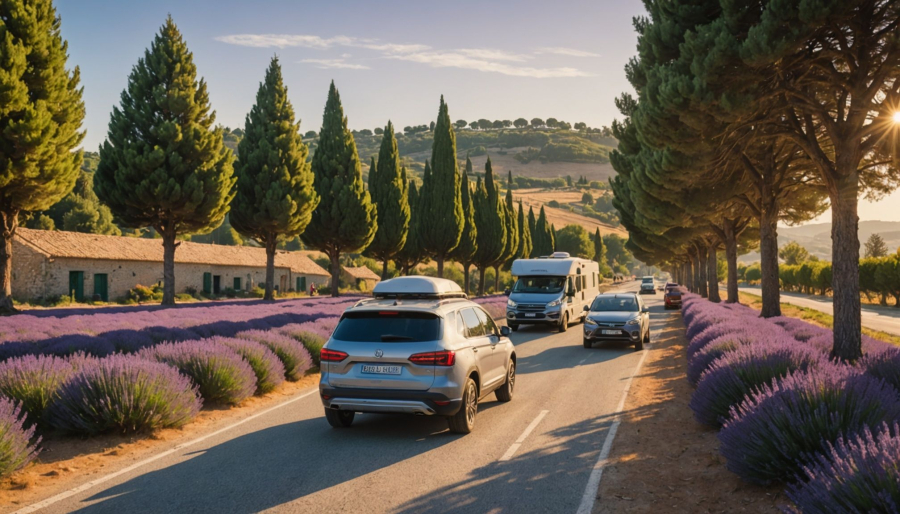
Optimal driving routes: From Calais to the Mediterranean coast
Selecting between the A6 and A7 motorways
The classic route to the South of France funnels drivers onto the Autoroute du Soleil - a network of toll roads stretching from Calais to Menton. Most head south via the A6, which arcs through Burgundy and Lyon. This route is reliable, but congestion builds around Lyon, especially during peak summer weeks. The Fourvière tunnel acts as a bottleneck; passing through mid-morning on a Saturday can mean unexpected delays. To avoid this, aim to cross Lyon outside rush hours - either early in the morning or late in the evening.
Using a télépéage (electronic toll tag) saves time at booths and reduces stress. While not mandatory, it’s a small upgrade that keeps the journey fluid. Some travelers consider the A7 further east, but it doesn’t bypass Lyon’s choke points. Instead, focus on timing: a well-planned start from Calais can shave hours off your total drive. And remember - even the most efficient route means little without rest stops that keep the whole family energized.
Logistical stopover suggestions for long-haul family road trips
Middle-of-France resting points
Pushing through from Calais to the Riviera in one go is possible, but rarely wise. Splitting the journey makes sense - both for driver alertness and family morale. Burgundy and the northern edge of the Auvergne offer ideal mid-point stopovers. These regions combine scenic countryside with reliable campsite infrastructure. Look for sites with secure hookups, shaded pitches, and child-friendly facilities. A single night here breaks the monotony and restores energy for the final leg.
Managing fuel and food supplies on the road
French autoroutes are dotted with aires de service every 15 to 20 kilometers. While convenient, fuel prices at these stops are often 10-15% higher than at off-motorway supermarkets. For cost-conscious travelers, pulling off at larger towns to refuel can yield savings. Similarly, packing picnic supplies from a hypermarché like Carrefour or Intermarché is cheaper - and more flexible - than relying on rest area snacks.
Some aires go beyond basics, offering playgrounds, pet zones, and clean restrooms. These are worth the slight detour. A 20-minute break with room to run burns off cabin fever more effectively than a sandwich eaten in the car. And if your mobile home kitchen is compact, stocking up on fresh produce mid-journey means healthier meals once you arrive.
Comparing travel options for your South of France adventure
Eurotunnel vs. Ferry: The time-efficiency factor
Speed, comfort, and control matter when traveling with a family. The Eurotunnel’s 35-minute shuttle is consistently faster than most ferry crossings, which can take 90 minutes or more. But speed isn’t the only factor - consistency is key. Ferries are subject to weather delays, especially in winter. The tunnel, being land-based, keeps schedules predictable.
| Criteria | Eurotunnel | Dover-Calais Ferry | Driving via Cherbourg |
|---|---|---|---|
| Speed | 35-minute crossing | 90+ minutes | 4+ hours from Portsmouth |
| Flexibility | Drive on, drive off | Same-day departures available | Long sea crossing, limited slots |
| Pet Comfort | Stay with your pet in the vehicle | Must leave pet in car or kennel | Extended time onboard |
| Cost | Generally higher base price | More promotional fares | Often cheapest, but time-intensive |
For many families, the Eurotunnel’s efficiency outweighs its premium cost. You board in Folkestone and disembark in Coquelles - all in under an hour. No seasickness, no queuing for the car deck, no waiting around. That predictability is worth its weight in peace of mind.
Final preparations for a luxury camping experience
Adapting your driving style for French roads
French road rules differ subtly but significantly from UK norms. One of the most common misunderstandings is the Priorité à droite rule, where traffic entering from the right has precedence - even on small roads. This is frequent in rural areas and campsite entrances, so stay alert. Speed limits also drop quickly in rain: automatic reduction to 110 km/h on motorways is enforced, and fines are common for those who miss the signs.
Before hitting the final stretch to the Riviera, check your tyre pressure. A fully loaded mobile home with underinflated tyres is a safety risk on long inclines. Also, ensure your headlights are adjusted - French rules require dipped beams even during the day in some areas. Arriving safely at your 5-star destination means respecting the rules of the road, not just enjoying the comfort of your lodging.
Frequently asked questions in practice
Is it worth taking the larger motorhome shuttle carriage?
Yes, if you’re driving a high-sided vehicle or campervan over 2 meters in height. The larger carriage offers more headroom and reduces the risk of scraping during loading. Travelers report easier boarding and a calmer experience, especially with nervous pets or young children on board.
How should I budget for the French 'Péages' on a drive to Fréjus?
Toll costs can vary, but expect to pay several hundred euros for a full journey from Calais to Fréjus. Using online toll calculators before departure helps estimate expenses. Factors include vehicle size, route taken, and number of stops - so plan accordingly.
Are there new low-emission zone requirements for 2026?
Yes, cities like Lyon, Marseille, and even smaller urban areas now require a Crit'Air environmental sticker. Without it, you risk fines when passing through. Order yours online before travel - it’s inexpensive and takes just days to arrive by post.
When is the best time to cross to avoid the 'Black Saturday' traffic?
Avoid weekends during peak July and August holidays, especially the first and third Saturdays. Crossing mid-week or overnight significantly reduces congestion. If you must travel on a busy weekend, aim for early morning departures to stay ahead of the rush.
